Myths About Imported vs British Cut Flowers--Busted
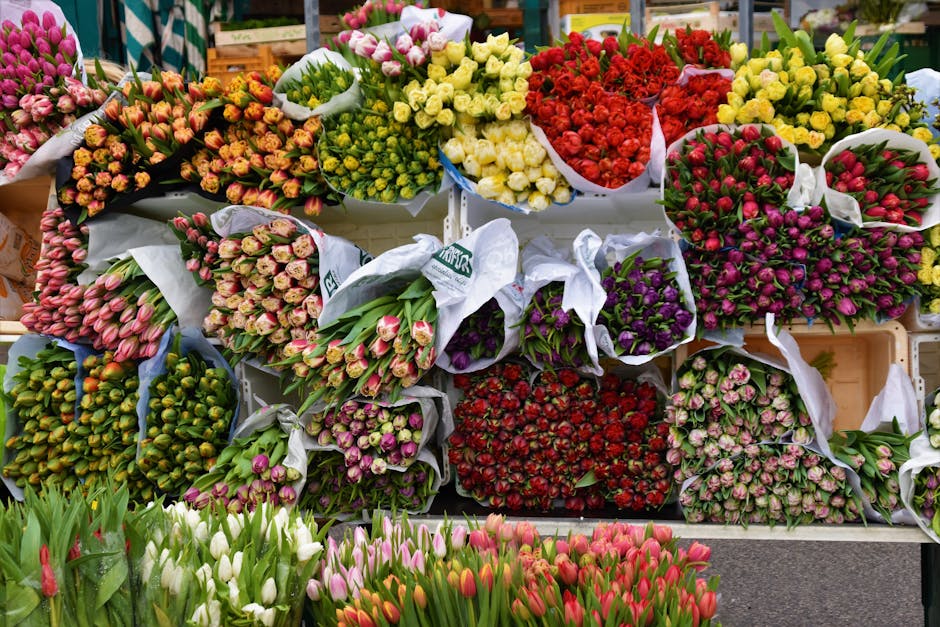
If you have ever stood at a florist's counter on a grey London morning, looking at a bucket of roses from Kenya and a tray of British tulips, you'll know the choice can feel strangely loaded. People assume imported flowers are always fresher, British flowers are always better for the planet, or that one option is automatically more expensive. Truth be told, it's a lot messier than that. This guide on Myths About Imported vs British Cut Flowers--Busted clears up the confusion so you can choose with confidence, whether you are buying for a wedding, a shop display, a dinner table, or a sensitive farewell arrangement.
We'll break down the most common myths, explain what actually affects quality and value, and give you a practical way to judge flowers without getting caught out by slogans or vague "eco" claims. No fluff. Just the stuff that helps you make a better decision.
- Why the myths matter
- How imported and British flowers actually differ
- Benefits and practical advantages
- Who this guide is for
- How to choose step by step
- Expert tips for better results
- Common mistakes to avoid
- Tools, resources and recommendations
- Law, compliance and best practice
- Comparison table
- Real-world example
- Practical checklist
- Frequently asked questions
Why Myths About Imported vs British Cut Flowers--Busted Matters
Flower buying looks simple until you need the right stems, on time, at the right budget, and in a condition that actually lasts. That's when myths start doing damage. A blanket belief like "imported is bad" can push you toward the wrong flowers for the season. Equally, assuming British-grown flowers are always cheaper can lead to sticker shock when supply is tight or a variety is out of season.
This matters because flowers are not just decorative. For many people they are tied to business presentation, customer experience, gifting, events, grief, hospitality, or simple home joy. If you get the choice wrong, the result is obvious: shorter vase life, disappointing colour, waste, and sometimes unnecessary cost.
There is also a sustainability angle, and that's where things get especially muddy. A lot of people focus on transport alone, but transport is only one part of the picture. Growing method, heating, refrigeration, packaging, stem length, waste, and how long flowers sit unsold all matter too. In other words, the story is broader than a simple "local good, imported bad" headline.
Key point: the best choice is usually not defined by where a flower was grown alone, but by season, handling, freshness, purpose, and how responsibly it was sourced.
How Myths About Imported vs British Cut Flowers--Busted Works
To bust the myths properly, you need to understand the supply chain. Imported flowers often travel by air or, in some cases, by road from European growers. British flowers are usually harvested closer to the point of sale, especially in peak season. That distance difference can affect freshness, but it does not automatically decide quality. Handling matters just as much as geography. A flower that travelled a long way but was kept cold, hydrated, and well packed can outperform a local stem that was cut late and left warming in a van for too long. Annoying? Yes. Common? Also yes.
Here's the practical reality. Imported flowers are often chosen for varieties that are difficult to grow commercially in the UK year-round, or for supply continuity when local farms are out of season. British flowers shine when they are in season and cut at the right stage. They can feel more characterful too, with natural variation that many florists and customers love.
So the "works" part is really a mix of five things:
- Seasonality: Is the flower naturally available now, or is it being forced?
- Freshness: How recently was it cut, cooled, and delivered?
- Handling: Was the cold chain maintained and the stem protected?
- Purpose: Is this for a one-day event, a week-long display, or a sentimental gift?
- Availability: Does the desired colour, shape, or variety exist in British supply right now?
That's the framework. Once you use it, the myths start falling apart pretty quickly.
Key Benefits and Practical Advantages
There is no single winner in the imported-versus-British debate. The real advantage comes from choosing the right source for the right job. That sounds obvious, but many people skip it and then wonder why the flowers look tired by day three.
Benefits of British cut flowers
- Seasonal character: British blooms often have a softer, more natural look that suits relaxed arrangements.
- Shorter supply chain: Less distance can mean quicker access from field to vase when handled well.
- Local support: Buying British can support growers closer to home and strengthen regional supply.
- Better fit for seasonal styling: Ideal for spring weddings, summer events, and British garden-inspired designs.
Benefits of imported cut flowers
- Year-round choice: You can access varieties that are not naturally in season in the UK.
- Consistency: Larger international growers can offer reliable volumes and more uniform stems.
- Colour and form range: Useful when a client wants something very specific.
- Event flexibility: Helpful for fixed-date occasions where the brief matters more than origin.
For buyers, the biggest practical advantage is not ideology. It is control. When you understand both options, you can manage cost, timing, style, and waste more effectively. And let's face it, waste is where the hidden expense often lives.
Who This Is For and When It Makes Sense
This topic is useful for more people than you might think. You do not need to be a florist to care about it. If you buy flowers even occasionally, the myths can influence what you spend and what you get.
- Home buyers: Anyone who wants flowers that last and suit the season.
- Wedding couples: Especially if you are trying to balance a look you love with a realistic budget.
- Event planners: When timing, volume, and consistency are non-negotiable.
- Florists and shop owners: Because stock choice affects customer satisfaction and margin.
- Hospitality teams: Hotels, restaurants, and venues often need dependable weekly displays.
- Gift buyers: If you want the bouquet to arrive fresh and meaningful, not just pretty on the day.
It makes sense to choose British flowers when seasonality is part of the message, when local provenance matters to the buyer, or when you want a more natural, garden-led look. Imported flowers make more sense when you need a specific stem out of season, a bold colour palette, or reliable volume for a date that won't move. Simple as that.
Sometimes people ask which is "better" and expect a single answer. But better for what? A January table centre, a July marquee wedding, and a sympathy bouquet all ask for different things. That's the real test.
Step-by-Step Guidance
If you want a practical way to choose between imported and British cut flowers, use this process. It is straightforward, and once you've done it a few times, it becomes second nature.
- Start with the occasion. Is the arrangement decorative, sentimental, commercial, or event-led?
- Check the season. If the flower is naturally in season in the UK, British may be the smarter choice.
- Clarify the look. Do you want wild and natural, sleek and uniform, or something in between?
- Ask about freshness. Find out when the flowers were cut and how they were transported.
- Look at vase life. A cheaper bunch that lasts two days is not really cheaper.
- Consider the environment. Look beyond transport and think about growing method and waste.
- Compare total value. Include presentation, longevity, and how much of the bouquet will be usable.
A quick real-world example: if you need peonies in early spring for a customer who absolutely wants that flower, imported stems may be the only reliable option. But if you're building an informal summer arrangement, British sweet peas, roses, and garden foliage may deliver a more characterful result at better value. The "right" answer changes with the brief. Every time.
One useful habit is to ask florists or suppliers not just "where are these from?" but "how fresh are they, and what would you choose for this purpose?" That second question gets much better answers, in our experience. It also separates sales talk from actual knowledge.
Expert Tips for Better Results
Below are the small decisions that tend to make the biggest difference. Nothing flashy. Just the kind of practical detail that seasoned buyers rely on.
1. Buy seasonally when you can
Seasonal British flowers often give the best balance of freshness, scent, and value. They also tend to look more natural in arrangements because they are not fighting the calendar.
2. Judge the stem, not the slogan
"British" and "imported" are labels, not quality ratings. Look at petals, bud stage, stem firmness, leaf condition, and smell. A good flower should feel alive, not tired.
3. Be careful with assumptions about sustainability
Transport matters, but so do heating, growing inputs, packaging, and waste. A flower with a shorter journey is not automatically lower impact if it was grown in energy-intensive conditions. It's more complicated than the sticker says.
4. Match the flower to the event timeline
If flowers need to look their best for several days, choose varieties known for vase life. If the arrangement is for one day only, fragrance and visual impact may matter more than endurance. Different job, different answer.
5. Ask for substitution rules
For weddings and events, agree what happens if a specific flower is unavailable. A good supplier should offer sensible substitutes that preserve colour, texture, and budget. That saves stress later.
Expert takeaway: the best flower choice usually comes from balancing season, freshness, and purpose rather than chasing a single "always best" rule.
Common Mistakes to Avoid
Even careful buyers get caught out by these. None of them are dramatic on their own, but together they can spoil a bouquet or blow a budget.
- Assuming imported means poor quality: Many imported flowers are handled with impressive care and arrive in excellent condition.
- Thinking local always equals sustainable: It often helps, yes, but the full picture is broader.
- Buying out-of-season British flowers without checking availability: You may pay more or compromise on quality.
- Ignoring transport and cold chain details: If flowers warm up too early, they may not recover well.
- Choosing on price alone: The lowest price can hide short life, waste, or disappointing presentation.
- Forgetting the end use: A photo-shoot bouquet and a hallway arrangement need different priorities.
One small but important mistake is buying flowers that look perfect in the bucket but have been open too far already. They may be gorgeous for an hour and then start collapsing just when you need them. Not ideal. Not at all.
Tools, Resources and Recommendations
You do not need special equipment to make a better choice, but a few simple tools and habits help.
- Seasonal awareness: Keep a rough sense of what grows well in the UK across spring, summer, autumn, and winter.
- Supplier questions: Ask about cut date, delivery timing, and storage conditions.
- Condition checks: Inspect stem ends, leaf quality, petal edges, and hydration.
- Planning notes: Write down what worked for past events, including what faded early.
- Budget comparisons: Compare not just stem price, but expected vase life and waste.
If you are buying for an event or regular venue display, a brief conversation with a knowledgeable florist is worth more than a dozen internet opinions. They can tell you which stems are behaving well that week, which is exactly the kind of detail that matters.
For buyers who want consistency and fewer surprises, it also helps to keep a simple "approved flowers" list for your home, business, or venue. That way, you are not starting from scratch every single time. A little boring, maybe. Very effective though.
Law, Compliance, Standards, or Best Practice
For most buyers, the main issue is not legal compliance in the strict sense, but transparency and good practice. Businesses selling flowers should be careful not to make misleading origin or sustainability claims. If a bouquet is promoted as British-grown, that claim should be accurate and supportable. The same applies to imported flowers described as eco-friendly or low-impact. Those are marketing statements, and they should be treated with care.
Good practice also means handling flowers properly once they arrive. Clean buckets, fresh water, appropriate refrigeration where used, and sensible stock rotation all help preserve quality. In the UK, florists and venues are also generally expected to follow standard food and hygiene-style cleanliness habits in shared prep spaces, even though flowers are not food. That means tidy storage, clean tools, and avoiding contamination from dirty water or decaying stems.
If you are buying for a public-facing business, being honest about origin is wise. Customers often appreciate transparency more than grand claims. "British where in season, imported where needed" is a much more believable and useful position than pretending one source does everything well.
Options, Methods, or Comparison Table
The table below gives a plain-English comparison. It is not about declaring a permanent winner. It is about helping you choose the right route for the job in front of you.
| Factor | British cut flowers | Imported cut flowers |
|---|---|---|
| Seasonality | Best in natural growing season | Available more consistently year-round |
| Variety range | Strong for seasonal and garden-style stems | Broader access to out-of-season or specialist flowers |
| Freshness potential | Excellent if harvested and delivered quickly | Excellent if cold chain and handling are strong |
| Environmental story | Often favourable on distance, but not always the full picture | Depends heavily on growing method and logistics |
| Look and style | Often more natural, romantic, and seasonal | Can be very uniform and precise |
| Best for | Seasonal weddings, local storytelling, relaxed arrangements | Specific requests, continuity, and out-of-season needs |
If you prefer a simple rule, use this: choose British when seasonality and character matter most; choose imported when availability and specificity matter most. That's the short version, anyway.
Case Study or Real-World Example
Imagine a small cafe in East London that wants weekly table flowers. In winter, the owner wants something bright but not too formal, and they also want the displays to last the full week without constant replacement. A good florist might suggest a mix of imported and British stems depending on what is available: perhaps imported roses or alstroemeria for staying power, paired with British foliage or seasonal stems if they are still strong that week.
Now compare that with a June wedding in Surrey. The couple wants soft, garden-inspired arrangements with loose movement and a natural feel. In that case, British peonies, roses, sweet peas, and seasonal foliage may be a much better fit than forcing out-of-season imports simply because they are familiar. The result can feel fresher, more cohesive, and more aligned with the mood of the day.
The lesson is simple. The smartest buyers do not choose sides. They choose outcomes. That subtle shift saves money, improves quality, and usually produces better-looking flowers too.
Practical Checklist
Use this before placing your next order.
- Have I chosen the flowers for a clear purpose?
- Is the flower in season in the UK right now?
- Do I care more about local provenance, exact variety, or vase life?
- Have I asked when the stems were cut?
- Do I know how they were transported and stored?
- Have I compared total value, not just price per stem?
- Will the flowers need to last one day, several days, or a full week?
- Am I comfortable with the sustainability story behind this choice?
- Have I allowed for substitutions if stock changes?
- Does the final arrangement fit the event, season, and budget?
If most of those answers are clear, you are in a much better position than the average impulse buyer. And if a few are fuzzy, that's fine. Ask one more question before you buy. Usually that's enough.
Get a free quote today and see how much you can save.
Conclusion
The biggest myth in the imported-versus-British debate is that one side always wins. In reality, the best choice depends on season, purpose, freshness, and the story you want the flowers to tell. Imported flowers can be essential, elegant, and beautifully handled. British flowers can be distinctive, seasonal, and deeply satisfying to buy and give. Both have a place.
If you remember just one thing, make it this: do not choose by label alone. Choose by the full picture. That means looking at the stem, the season, the handling, and the outcome you want. Once you do that, the myths get much quieter, and the flowers usually get better.
And honestly, that's the nice part. You end up with something that feels right in the room, right for the moment, and right for you.
Frequently Asked Questions
Are imported flowers always worse than British flowers?
No. Imported flowers are not automatically worse. Quality depends on harvesting, cooling, transport, and how long they have been out of water. Some imported stems arrive in excellent condition and last beautifully.
Are British cut flowers always more sustainable?
Not always. Shorter transport can help, but sustainability also depends on growing methods, heating, packaging, and waste. A careful comparison is better than a simple assumption.
Which flowers are best to buy British?
Seasonal British flowers such as tulips, daffodils, peonies, sweet peas, dahlias, and many garden-style stems are often a strong choice when they are naturally in season.
When do imported flowers make more sense?
Imported flowers make sense when you need a specific variety out of season, require uniform supply for an event, or want a bloom that is not reliably grown in the UK year-round.
Do imported flowers last longer?
Sometimes they can, but not because they are imported. Vase life depends more on freshness at purchase, handling, hydration, and the flower variety itself.
Are British flowers more expensive?
They can be, especially if a variety is in short supply or out of season. But when British flowers are in season, they may offer excellent value, especially if you factor in freshness and character.
How can I tell if flowers are fresh?
Look for firm stems, healthy leaves, clean water, petals without browning, and buds that are not already too open. A fresh flower should look lively rather than exhausted.
What is the biggest mistake people make when choosing flowers?
The biggest mistake is focusing only on origin or price and ignoring the real job the flowers need to do. Purpose, season, and lifespan matter far more than most people realise.
Should I ask my florist where the flowers came from?
Yes, if origin matters to you. A good florist should be able to explain what is British, what is imported, and why a particular mix was chosen for your brief.
Are local flowers always better for weddings?
Not necessarily. Local flowers are often a wonderful option, especially in season, but the right wedding flowers depend on style, timing, budget, and the couple's priorities.
Can I mix British and imported flowers in one arrangement?
Absolutely. In fact, mixing them is often the most practical option. Many beautiful arrangements combine seasonal British stems with imported flowers chosen for structure, colour, or reliability.
What should I ask before ordering in bulk?
Ask about availability, cut date, vase life, substitution policies, and storage conditions. Bulk buying is where these details matter most, because even a small quality issue gets amplified across the whole order.